
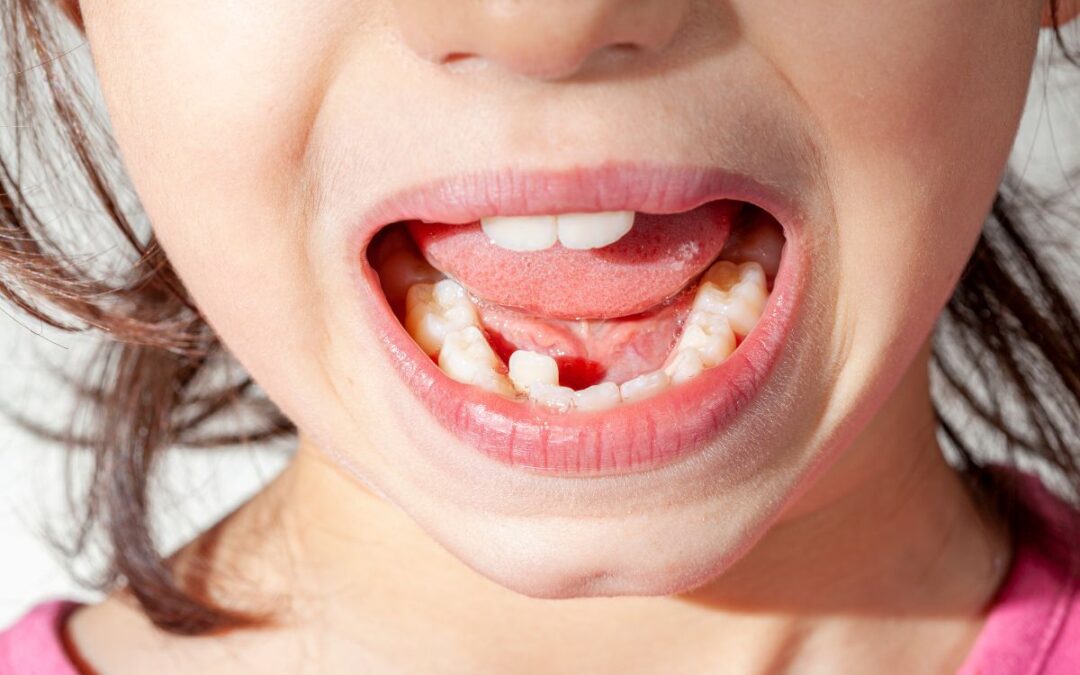
When permanent teeth coming in behind baby teeth appear, parents often wonder whether something is wrong. In many cases, this can happen during normal tooth development. At Center for Pediatric Dentistry in Augusta, parents can learn what to expect as their child’s baby teeth make way for permanent teeth.
Children lose their baby teeth at different times. However, permanent teeth sometimes begin to emerge before a baby tooth has fallen out. This can create a double row of teeth, especially around the lower front teeth.
The good news is that this situation does not always require treatment. Still, parents should know what causes it and when a dental evaluation makes sense.
Why Do Permanent Teeth Come in Behind Baby Teeth?
Permanent teeth develop underneath or behind baby teeth before they erupt. As a permanent tooth moves toward the surface, it usually puts pressure on the roots of the baby tooth above it.
Over time, the baby tooth root dissolves. This process is called root resorption. Eventually, the baby tooth becomes loose and falls out, allowing the permanent tooth to move into a more typical position.
Sometimes, however, the permanent tooth takes a slightly different path.
When this happens, the new tooth may emerge behind the baby tooth instead of directly underneath it. Parents may notice a new tooth appearing while the baby tooth still looks firmly attached.
If you are concerned about your child’s eruption pattern, a Pediatric dentist can evaluate the teeth and developing bite.
Is a Second Row of Teeth Normal?
A second row of teeth can look alarming, but it does not automatically mean your child has a serious dental problem.
In fact, this pattern often occurs with the lower permanent front teeth. The tongue can help push newly erupted teeth forward after the baby teeth fall out.
A few things to watch include:
- Whether the baby tooth becomes loose over time
- Whether the permanent tooth continues to erupt
- Whether your child has pain or swelling
- Whether the new tooth looks unusually rotated
- Whether the baby tooth remains firmly in place
- Whether several teeth appear crowded
Therefore, parents should focus on the overall pattern rather than the appearance of one tooth alone.
The American Academy of Pediatric Dentistry notes that developing teeth and bite patterns need ongoing assessment because eruption problems can involve factors such as crowding, ectopic eruption, missing teeth, extra teeth, and other developmental concerns.
What Causes Permanent Teeth to Erupt Behind Baby Teeth?
Several factors can affect how permanent teeth emerge. Often, more than one factor contributes to the problem.
Crowding
Limited space can change the path a permanent tooth takes as it erupts. Consequently, the tooth may move toward an open area behind or beside the baby tooth.
Baby Teeth That Stay Too Long
Sometimes, a baby tooth does not loosen when expected. As a result, the permanent tooth may find another path into the mouth.
Differences in Tooth Development
Every child develops differently. Tooth size, jaw growth, and eruption patterns can vary from one child to another.
Extra or Missing Teeth
In some cases, an extra tooth or a missing permanent tooth can affect normal eruption. A dentist may use an examination or dental X-rays when needed to understand what is happening below the gums.
Early Tooth Loss
A baby tooth that falls out too early can also affect the available space for permanent teeth. According to the AAPD, early loss of primary teeth and developing bite problems may require evaluation and appropriate management.
When Should Parents Be Concerned?
A permanent tooth behind a baby tooth deserves attention when the situation does not improve or other symptoms appear.
Contact a dental professional if you notice:
- The baby tooth stays firmly in place while the permanent tooth continues growing
- The child experiences ongoing pain
- The gums become swollen or red
- The permanent tooth appears severely rotated
- Several teeth show unusual eruption patterns
- Your child has trouble biting or chewing
- The teeth appear significantly crowded
Pain, swelling, or signs of infection deserve prompt attention. Likewise, parents should not try to forcefully pull out a baby tooth at home.
A dental examination can help determine whether the tooth simply needs more time or whether intervention could help guide eruption.
What Happens During a Dental Evaluation?
A pediatric dental evaluation usually starts with a discussion about your child’s dental history and tooth development.
The dentist may examine the gums, baby teeth, permanent teeth, and bite. If the eruption pattern is unclear, dental imaging may help show the position of unerupted teeth.
Depending on the situation, the dentist may recommend:
- Monitoring: The tooth may be watched if normal eruption appears likely.
- Removing a baby tooth: A dentist may recommend removal when a retained baby tooth blocks the permanent tooth.
- Space management: Some children need help maintaining or creating enough room for developing teeth.
- Further evaluation: More significant eruption concerns may require additional assessment.
Treatment depends on your child’s age, dental development, available space, and the position of the permanent tooth.
Therefore, parents should avoid assuming that every second row of teeth needs immediate treatment.
Can Parents Help Permanent Teeth Erupt Normally?
Parents cannot control every part of tooth eruption. However, they can support healthy oral development.
Encourage your child to:
- Brush twice each day with fluoride toothpaste
- Clean between teeth regularly
- Eat a balanced diet
- Limit frequent sugary snacks and drinks
- Avoid using teeth to bite hard objects
- Attend regular dental examinations
Regular dental visits also allow a dentist to monitor changes over time. Early evaluation can make it easier to identify developing problems before they become more complicated.
The AAPD recommends ongoing assessment of developing dentition because early diagnosis can help dentists determine appropriate treatment timing.
What If the Baby Tooth Falls Out?
In many cases, the permanent tooth gradually moves forward after the baby tooth falls out. The tongue and natural growth of the jaw can influence this adjustment.
However, every child’s situation differs. The permanent tooth may need time to settle into position.
If the tooth remains significantly out of position, a dentist can assess the bite and determine whether additional care is appropriate.
Seeing a permanent tooth appear behind a baby tooth can be surprising, but it does not always signal a serious problem. Often, the baby tooth loosens naturally and the permanent tooth moves toward a better position.
Still, persistent baby teeth, pain, swelling, crowding, or unusual eruption patterns deserve professional attention. Early monitoring can help protect your child’s developing smile.
When you are ready to have your child’s teeth evaluated, schedule your appointment with Dr. Lee Baker at Center for Pediatric Dentistry in Augusta.