
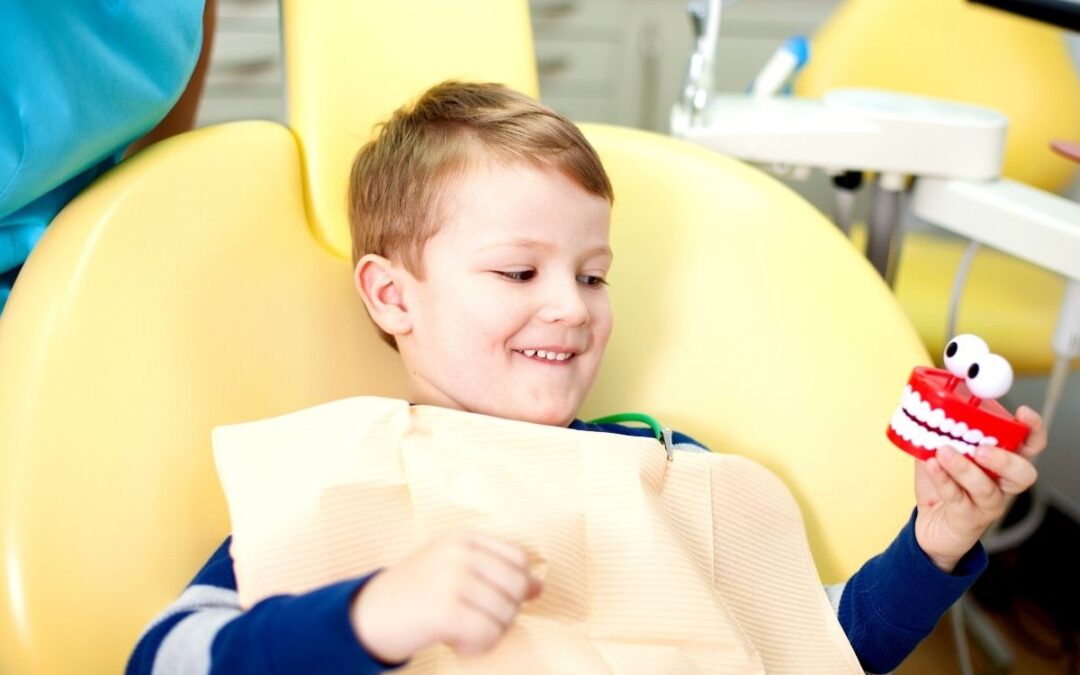
Bringing your child to the dentist for the first time can feel a little overwhelming. You might wonder what the dentist will actually do, how long the appointment will take, and whether your child will cooperate. Understanding what happens during your child’s first dental visit can help ease those worries.
At Center for Pediatric Dentistry, we guide families through each step of the process so both parents and children know what to expect. A first dental visit is an important step toward building healthy habits and helping your child feel comfortable with dental care from an early age.
When Should Your Child’s First Dental Visit Happen?
The American Academy of Pediatric Dentistry recommends scheduling your child’s first dental visit by their first birthday or within six months after their first tooth appears.
Some parents wait until their child has several teeth or develops a dental problem. However, an early visit can help identify potential concerns before they become more serious.
Early dental visits can also help your child:
- Become familiar with the dental office
- Feel more comfortable around the dentist
- Learn that dental visits can be positive experiences
- Establish healthy oral care habits early
- Receive preventive care before cavities develop
Your child’s first appointment may be shorter and simpler than a regular dental visit. The goal is often to check oral development, answer your questions, and help your child become comfortable with the dental environment.
What Happens During Your Child’s First Dental Exam?
Once your child feels comfortable, the dental team will begin with a gentle review of their health and dental history.
Parents may be asked about:
- Your child’s medical history
- Current medications
- Eating and drinking habits
- Brushing routines
- Thumb sucking or pacifier use
- Teeth grinding
- Previous dental concerns
This information helps the dentist understand your child’s overall oral health before beginning the examination.
Next, the dentist will carefully examine your child’s mouth. The examination is typically gentle and designed to help children feel safe and comfortable.
What Does the Dentist Check?
During the examination, the dentist may check:
- The number and condition of baby teeth
- Signs of tooth decay or discoloration
- Gum health
- How the teeth are erupting
- Bite alignment
- Jaw development
- Oral habits that may affect the teeth
- Other concerns related to oral development
For very young children, the examination may happen while they sit on a parent’s lap. This approach can help babies and toddlers feel more secure during their first appointment.
Will My Child Need Dental X-Rays?
Not every child needs X-rays during their first dental visit. The dentist will determine whether they are necessary based on your child’s age, dental development, and individual needs.
Dental X-rays can help the dentist see areas that cannot be examined with the eyes alone. For example, they may help identify concerns between teeth or beneath the gumline.
When X-rays are recommended, the dental team uses appropriate safety measures and determines the imaging needed based on your child’s specific dental needs.
What Happens During a Pediatric Dental Cleaning?
Depending on your child’s age and comfort level, the dental team may perform a gentle cleaning during the first visit.
A pediatric cleaning can include removing plaque from the teeth, gently polishing tooth surfaces, and reviewing proper brushing techniques.
The dental team uses an approach designed specifically for children. They may explain each step in simple, easy-to-understand language to help your child know what is happening.
A typical cleaning may include:
- Gentle removal of plaque from the teeth
- Cleaning around the gumline
- Polishing the teeth
- Flossing between teeth when appropriate
- Reviewing proper brushing habits
The dental team may also show parents and children the best way to brush and care for developing teeth at home.
Will My Child Receive a Fluoride Treatment?
Depending on your child’s age and risk of tooth decay, the dentist may recommend a fluoride treatment.
Fluoride helps strengthen tooth enamel and can support cavity prevention. The treatment is usually quick and simple.
The dentist will discuss whether fluoride is appropriate for your child and provide guidance based on their individual oral health needs.
What About Dental Sealants?
Dental sealants may be recommended for some children, particularly after permanent molars begin to erupt.
Molars have deep grooves on their chewing surfaces where food particles and bacteria can collect. Sealants create a protective barrier over these areas and can help reduce the risk of cavities.
Applying dental sealants is generally a simple process. The dentist can discuss whether sealants may be beneficial as your child’s permanent teeth develop.
How We Help Children Feel Comfortable at the Dentist
It is completely normal for children to feel nervous during a dental visit. Some children may cry, while others may feel shy or unsure about sitting in the dental chair.
A positive dental experience does not always mean a child will be completely calm. Every child responds differently, especially during their first visit.
Our team focuses on helping children feel comfortable by using a calm and child-friendly approach. We explain procedures in simple language and give children time to adjust to the environment.
We may use:
- Calm and reassuring communication
- Simple explanations
- Positive reinforcement
- Gentle introductions to dental instruments
- Extra time when a child needs to adjust
- A patient and supportive approach
The goal is to help your child gradually build trust and confidence during dental visits.
How Parents Can Prepare Their Child for the First Dental Visit
Parents can play an important role in helping children feel prepared.
Before the appointment, you can:
- Read children’s books about visiting the dentist
- Play pretend dentist at home
- Practice opening wide for a quick tooth check
- Talk about the visit in a positive and relaxed way
- Let your child know that the dentist will count and check their teeth
- Bring a favorite comfort item for younger children if needed
Try to keep your explanation simple. You do not need to describe every possible procedure before the appointment.
It is also helpful to avoid phrases such as “It won’t hurt” or “Don’t be scared.” These statements can sometimes introduce worries that your child did not previously have.
Instead, you can say something simple, such as, “The dentist is going to count your teeth and help you keep your smile healthy.”
How Long Does a Child’s First Dental Visit Take?
A child’s first dental appointment may take approximately 30 to 45 minutes, although the length can vary.
The appointment may be shorter for babies and toddlers, especially when the primary goal is to introduce the child to the dental environment and complete an initial examination.
Older children may have more time for an examination, cleaning, or other preventive care.
The dental team will consider your child’s comfort level and individual needs throughout the visit.
What Should Parents Bring to the First Dental Appointment?
Preparing before the appointment can help the visit go smoothly.
You may want to bring:
- Your child’s medical information
- A list of medications your child takes
- Dental insurance information, if applicable
- Information about previous dental concerns
- Questions you would like to ask the dentist
- A comfort item for younger children
You should also tell the dental team about concerns such as thumb sucking, pacifier use, teeth grinding, difficulty chewing, or anything else related to your child’s oral development.
What Happens After the First Dental Visit?
After the examination, the dentist will discuss your child’s oral health with you.
You may receive guidance about:
- Brushing techniques
- Fluoride use
- Flossing
- Healthy eating habits
- Cavity prevention
- Oral habits
- Your child’s developing teeth and bite
The dentist may also recommend when your child should return for their next appointment.
Regular dental visits allow the dental team to monitor your child’s oral development and identify potential concerns as early as possible.
Why Is Your Child’s First Dental Visit Important?
Your child’s first dental visit is about more than checking for cavities. It creates an opportunity to establish healthy habits and introduce your child to professional dental care.
Early dental visits can help:
- Monitor tooth and jaw development
- Identify potential dental concerns early
- Support cavity prevention
- Teach parents about proper oral care
- Help children become familiar with dental visits
- Build healthy habits for the future
Starting dental care early can also make future appointments feel more familiar. As children continue visiting the dentist regularly, they often become more comfortable with the dental environment and the people caring for their smiles.
Schedule Your Child’s First Dental Visit
Knowing what to expect can make your child’s first dental visit easier for the entire family. From the initial examination to preventive care and oral health guidance, every step helps support your child’s developing smile.
Your child does not need to have a dental problem before seeing a dentist. An early visit provides an opportunity to check their oral development, answer your questions, and begin building healthy habits.
A positive first experience can help create a strong foundation for future dental care.
Schedule your child’s appointment today and take an important first step toward supporting a lifetime of healthy smiles.